The training has been going well; I was able to run 5 marathons, 1 ultra and 4 half marathons over over the last three weeks. Over the next few weeks I will be running with my full backpack in order to get used to the weight of the pack, but also to figure out where I need to make adjustments in my pack. I didn’t do that well enough during my previous race and came to find out that I should have made some adjustments on my backpack such as adding extra securing straps and extra padding in the shoulder part of the pack.
At this moment I have received all the items that I still needed to order such as my high-calory meals, bivvy bag (one of those emergency foil bags), poncho and some other items so I can now finally try out the if everything fits in the bag. I have two bags to choose from so I will try out both to figure out which one fits best and which one is the most comfortable pack to run with.
One of the most important parts is to figure out where I can save weight. I didn’t do that part very well last time and learned my lesson. Now I am really looking at every gram. I take every item and figure out what I can do to reduce weight. For example; I have a few rapid covid tests as part of the mandatory equipment. This comes with an enormous piece of paper with all kinds of info I don’t need. I only need the part with the instructions and so I cut all the info off that I don’t want. It saved me 3 grams and yes that doesn’t sound a lot, but doing this with every item, you can easily save yourself a lot of weight.

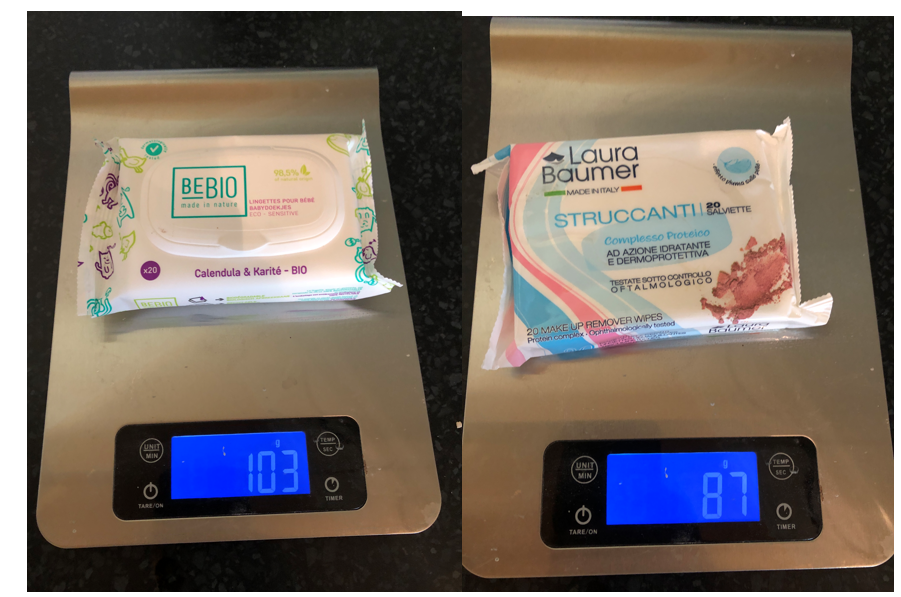
I have several headlamps and thus I need to weigh which one is the lightest; I got two options for wet wipes – both contain 20 wipes but one packages is 103 grams while the lighter one is 87 and thus I saved 16 grams.
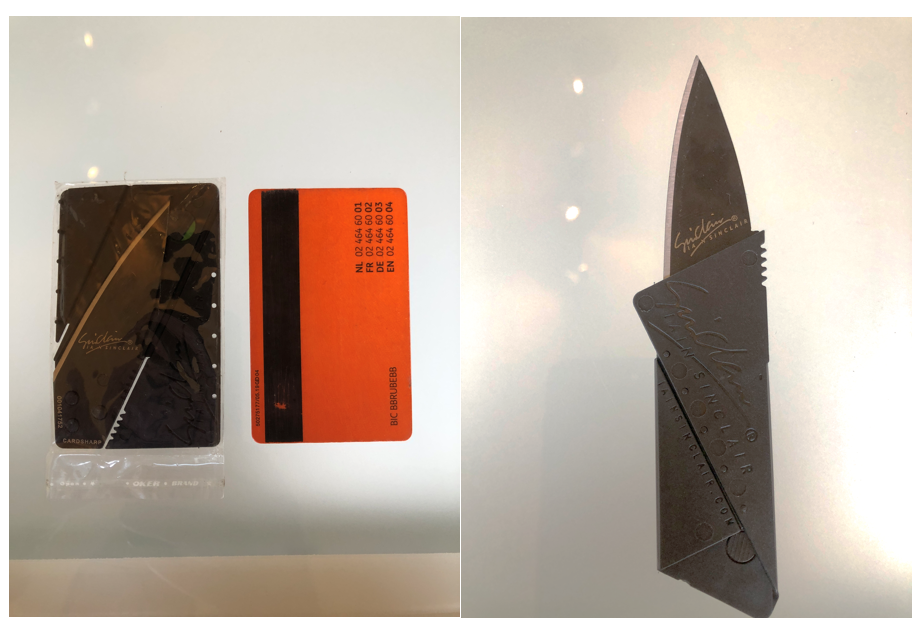
I also have to bring a pocket knife and found the lightest and smallest solution; a credit card size fold-out knife that only weighs 14 grams….
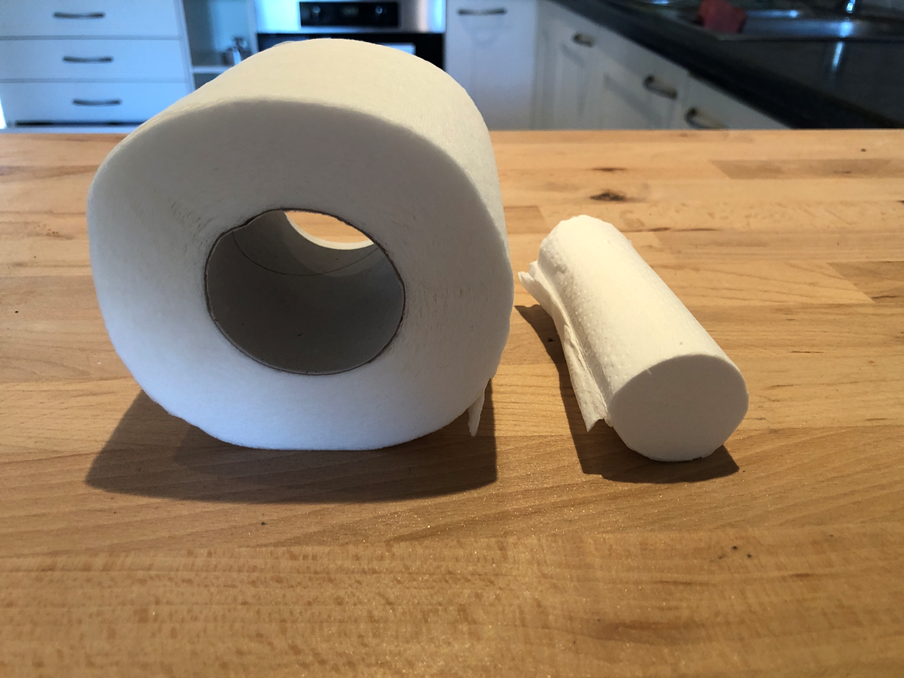
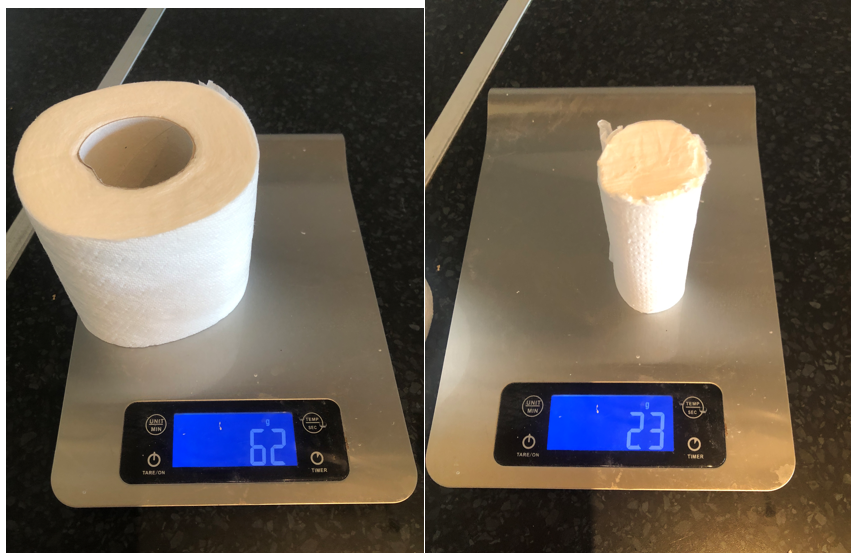
toilet paper: instead of bringing a standard roll, I go for the compressed version. It doesn’t only save me weight but also a lot of space; same amount of paper but much less volume and weight.
After I figured out the weight of the items, the only project left is the food. Food for 6 days takes most of the weight and volume and thus also here, I need to get it down to a science and reduce volume, not weight; I can’t nor I want to cut down on food, as this is the most important item during the race. Without sufficient fuel, changes are slim to successfully complete a race of this magnitude. Besides that, there is a requirement for the amount of calories you need to bring; 14,000. This will be checked during race check-in and what most runners do, myself included, is to make a spreadsheet of all food-related items and their calories . This gives me the correct indication if I am in compliance and it is much easier for the folks who are checking the mandatory items.
To make it easy for myself, I make bags of food/gels per day and label it as such. This way I don’t need to empty my pack several times a day to find my stuff. Prior to th run I take the bag I need which includes breakfast, lunch, dinner, electrolytes, energy gels, energy drink powder and put it on the top of everything else so it is easy to find without having to empty your pack.
The lunch and dinner meals are so called freeze-dried food which means you need to add hot water and let it sit for 5 minutes. The meals come in a sealed back and these bags are pretty heavy (heavy as in 50 grams x 2 meals a day x 6 days is 600 gram in unnecessary packing material – like last time, I will remove the meals from the original package after which I will throw it in a blender to break down the big chunks in order to reduce volume
Once everything is blended, I will pack it in small plastic bags. I do this for all lunch en dinner meals. For breakfast I will take 55 grams of oatmeal with 15 grams of sugar. In the camps there is hot water but my experience from previous events is that adding hot water to oatmeal is just not doing it. The hot water cools off fast and your oats will stay too hard to my liking. It stays too hard and I believe it takes too long to break down in my stomach before it starts to release the required energy. I found a way that works for me; I also blend the oats to fine powder and after an hour of weighing and blending, my meal packs are ready.
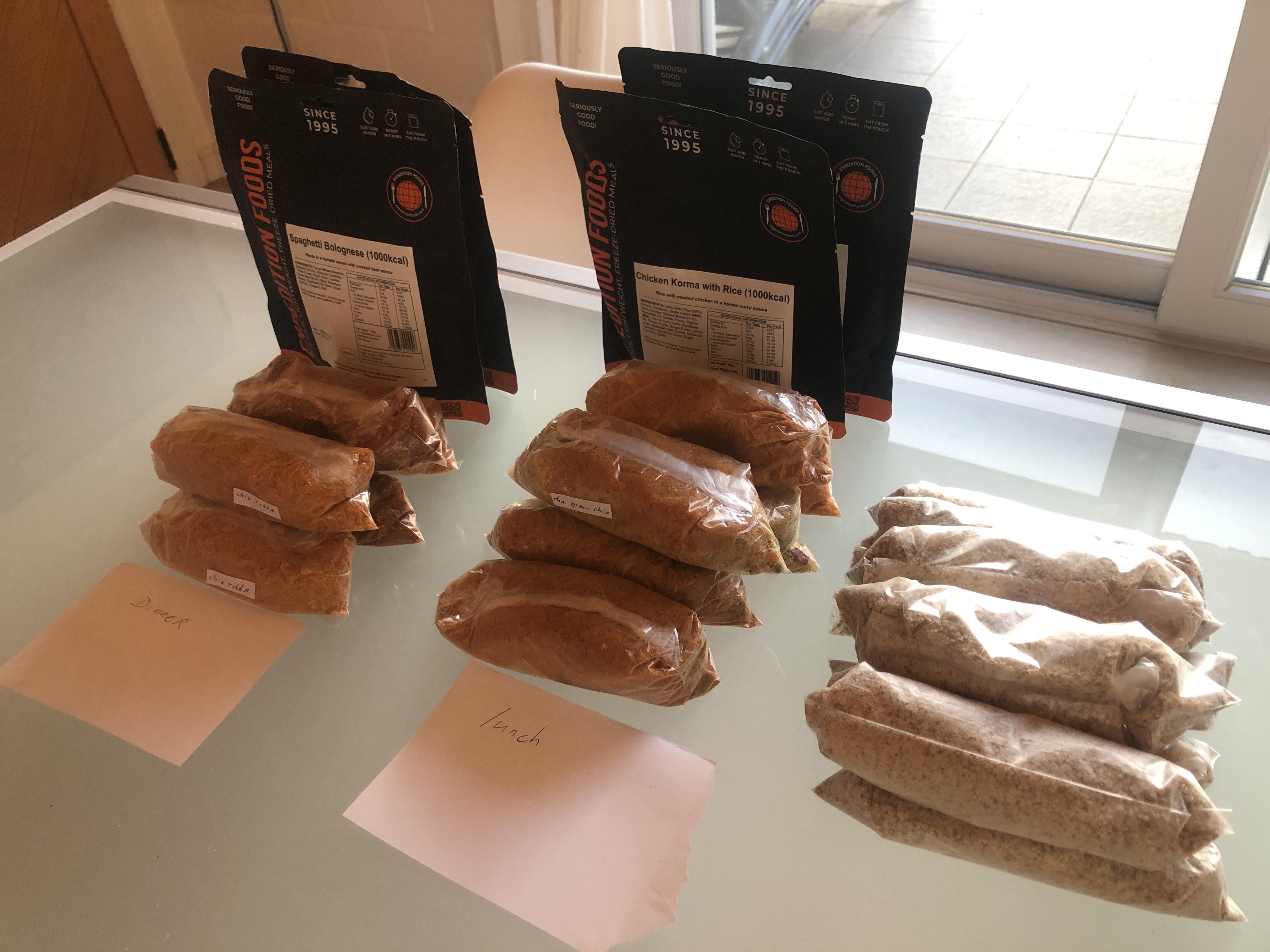
The only thing left is to put the meals day by day, including the energy gels and this way, I only have to look in my backpack and grab a bag with all the food I need for a specific day and this is the end result.
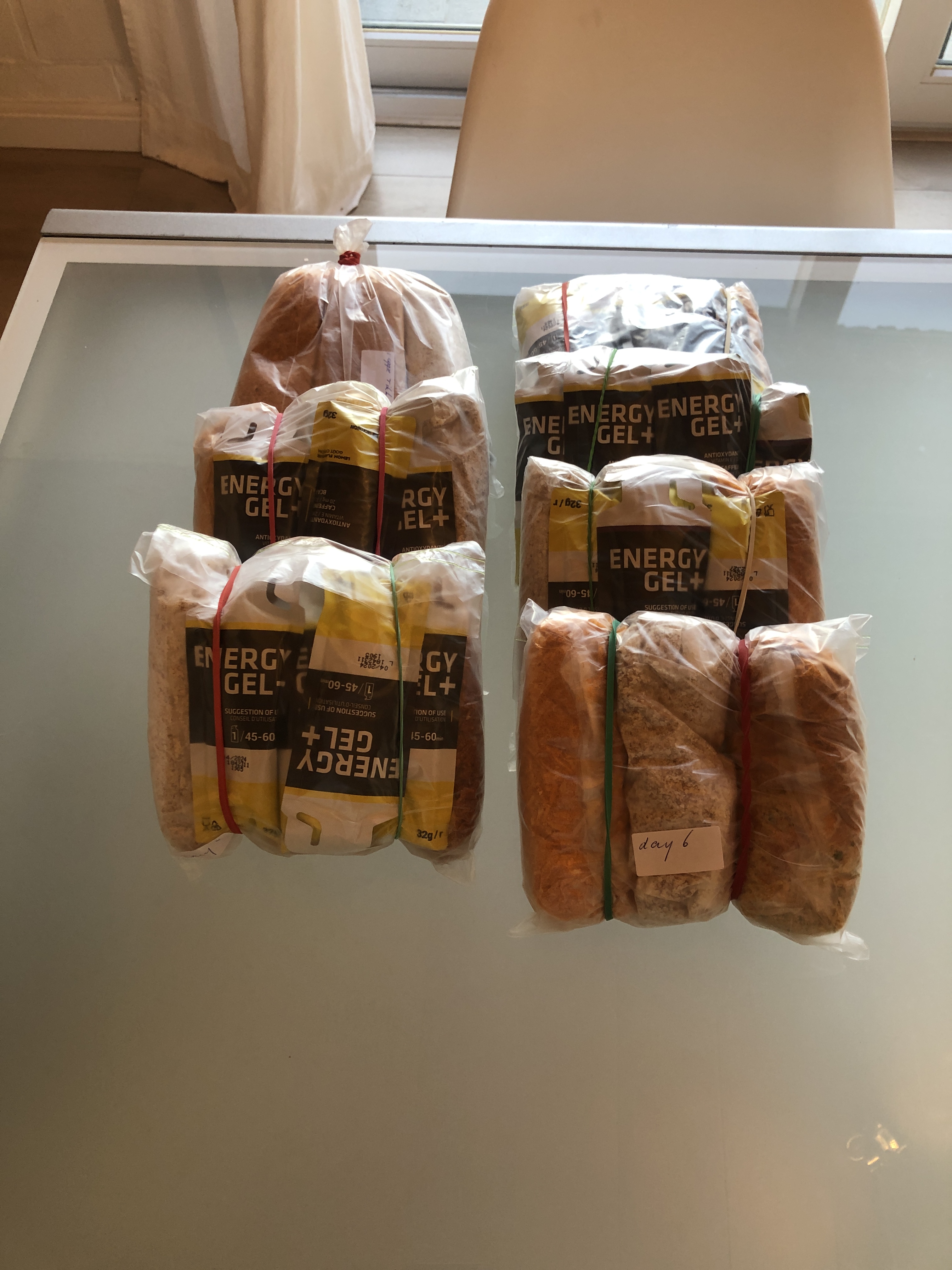
so, 5 days of running and 7 packs of food as you see in the below photo
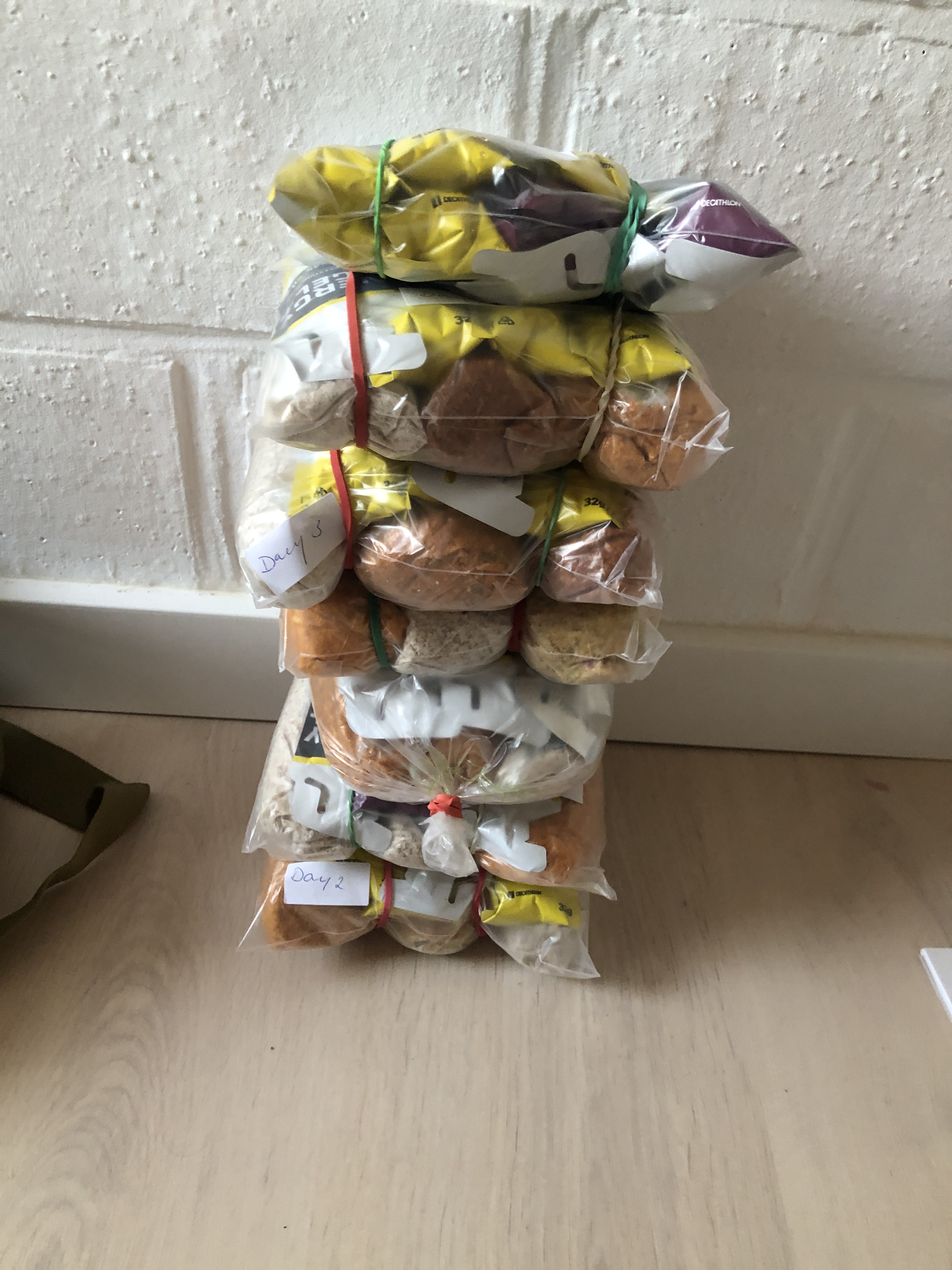
This is because day 5 is a day that we have to run 53 miles (85 km) and this means that I need to bring one extra pack of energy gels, 18 pieces, as I will be running for at least 10 hours which includes a climb of 1800 meter (5,400 ft). After that long run, there will be an extra day in camp, as we are waiting for the last runners, as some will take a few hours sleep on the course which means that the last person arrives in camp after 26 hours.
The next update will be next week, as I need a week to play with my backpacks in order to decide which pack to bring…till then my friends.

 Bert van Mackelenbergh